Table of Contents
How AI Analyzes Conflicting Arguments
Introduction to AI and Argument Analysis
The ability of artificial intelligence (AI) to analyze and understand complex human arguments has made significant progress in recent years. With the advent of deep learning and natural language processing (NLP) techniques, AI systems can now effectively identify, categorize, and evaluate arguments presented in various forms of text, speech, and even visual data. This capability has far-reaching implications for various fields, including law, politics, education, and business, where the ability to analyze and resolve conflicting arguments is crucial.
The Process of AI Argument Analysis
The process of AI argument analysis involves several steps:
- Text Preprocessing: AI systems first preprocess the input text to remove any unnecessary characters, such as punctuation and special characters, and convert it into a format that can be easily processed.
- Part-of-Speech (POS) Tagging: The AI then performs POS tagging to identify the parts of speech (nouns, verbs, adjectives, etc.) in the input text.
- Named Entity Recognition (NER): The AI system performs NER to identify named entities, such as people, places, and organizations, in the input text.
- Argument Identification: The AI system uses various techniques, such as rule-based systems and machine learning algorithms, to identify the arguments presented in the input text.
- Argument Categorization: The AI system categorizes the identified arguments into various categories, such as deductive, inductive, or abductive arguments.
- Argument Evaluation: The AI system evaluates the arguments based on various factors, such as their strength, weakness, and validity.
Techniques Used in AI Argument Analysis
Several techniques are used in AI argument analysis, including:
Machine Learning
Machine learning algorithms, such as decision trees, random forests, and support vector machines (SVMs), are used to identify patterns and relationships in the input text.
Deep Learning
Deep learning techniques, such as convolutional neural networks (CNNs) and recurrent neural networks (RNNs), are used to analyze the input text and identify the arguments presented.
Rule-Based Systems
Rule-based systems are used to identify the arguments presented in the input text based on predefined rules and patterns.
Applications of AI Argument Analysis
The ability of AI to analyze and understand complex human arguments has various applications, including:
Law and Justice
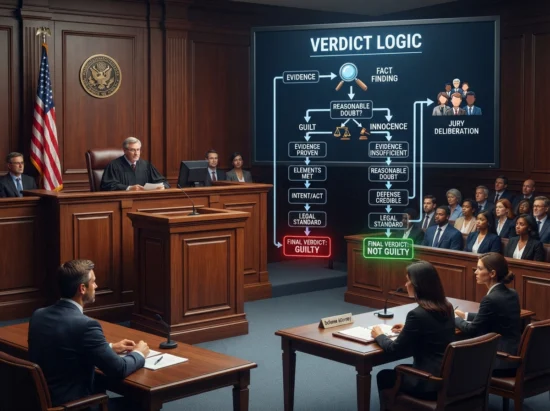
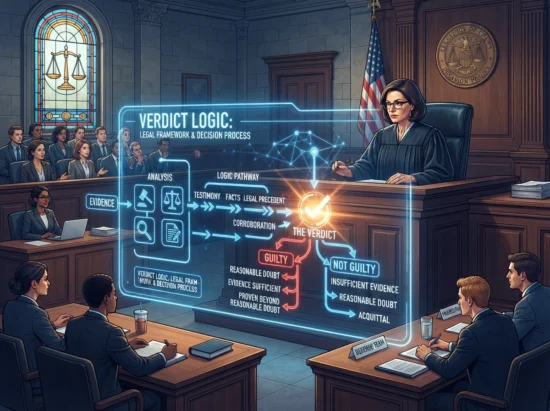
AI can be used to analyze and evaluate arguments presented in court cases, helping judges and lawyers to make informed decisions.
Politics and Governance
AI can be used to analyze and understand the arguments presented by politicians and other stakeholders, helping policymakers to make informed decisions.
Education and Research
AI can be used to analyze and understand the arguments presented in academic papers and research studies, helping researchers to identify patterns and relationships.
Business and Decision-Making
AI can be used to analyze and understand the arguments presented by stakeholders, helping businesses to make informed decisions.
Challenges and Limitations of AI Argument Analysis
While AI has made significant progress in analyzing and understanding complex human arguments, there are several challenges and limitations to consider, including:
Contextual Understanding
AI systems often struggle to understand the context of the input text, which can lead to incorrect argument identification and evaluation.
Semantic Understanding
AI systems often struggle to understand the nuances of human language, which can lead to incorrect argument identification and evaluation.
Biased Data
AI systems can be biased towards certain types of data, which can lead to incorrect argument identification and evaluation.
Conclusion
The ability of AI to analyze and understand complex human arguments has made significant progress in recent years. While there are several challenges and limitations to consider, AI has the potential to revolutionize various fields, including law, politics, education, and business, where the ability to analyze and resolve conflicting arguments is crucial.
FAQs
What is the difference between deductive and inductive arguments?
Deductive arguments are those in which the conclusion is logically certain, given the premises. Inductive arguments, on the other hand, are those in which the conclusion is probable, but not certain, given the premises.
Can AI systems identify and evaluate emotional arguments?
Yes, AI systems can identify and evaluate emotional arguments. However, they often struggle to understand the nuances of human emotions, which can lead to incorrect argument identification and evaluation.
How does AI analyze and evaluate conflicting arguments?
AI systems analyze and evaluate conflicting arguments by using various techniques, such as machine learning, deep learning, and rule-based systems. They first identify the arguments presented in the input text, categorize them into various categories, and then evaluate them based on various factors, such as their strength, weakness, and validity.
What are the limitations of AI argument analysis?
The limitations of AI argument analysis include contextual understanding, semantic understanding, and biased data. AI systems often struggle to understand the context of the input text, which can lead to incorrect argument identification and evaluation. They also struggle to understand the nuances of human language, which can lead to incorrect argument identification and evaluation. Additionally, AI systems can be biased towards certain types of data, which can lead to incorrect argument identification and evaluation.
Can AI systems be used to resolve conflicts and disputes?
Yes, AI systems can be used to resolve conflicts and disputes. They can analyze and understand the arguments presented by stakeholders, identify the underlying issues, and provide recommendations for resolution. However, AI systems are not a replacement for human judgment and decision-making. They should be used as a tool to support human decision-making, rather than as a replacement for it.